The public can learn about what post-secondary students are studying at North Island College and the real-world implications at Applied Research Day.
The event, hosted by NIC’s Centre for Applied Research, Technology and Innovation (CARTI), takes place inside the Stan Hagen Theatre at the Comox Valley campus on April 9, noon to 3 p.m.
"As an instructor in the Island Pre-Health Science Program, I see how engaging in applied research deepens students’ understanding and strengthens their academic and professional skills,” said Sarai Racey, instructor for Biology and Public Health. “Applied Research Day will highlight the breadth of projects happening across NIC’s disciplines and showcases the innovative work led by both our students and our faculty and staff—the project abstracts have been fantastic!”
The event’s theme is “Making Waves: Research in Action,” and it will feature work looking at health solutions, engineering breakthroughs, social impacts or seaweed innovation.
Lyndsay Silvestre, a student researcher with CARTI, is presenting, with Kirsten Dobler, an NIC Bak̓ʷəmk̓ala Instructor who is contributing language support and a teaching video. Silvestre is also helping with event logistics, such as looking up floor plans or calling printing shops.
"When I started as a student researcher with CARTI, I had no idea it would result in both supporting and participating in Research Day,” she said.
For her project at Applied Research Day, her goal is to get people talking about seaweed and language, to know they can build a place for themselves in sciences as well as broaden their definition of research and what is possible.
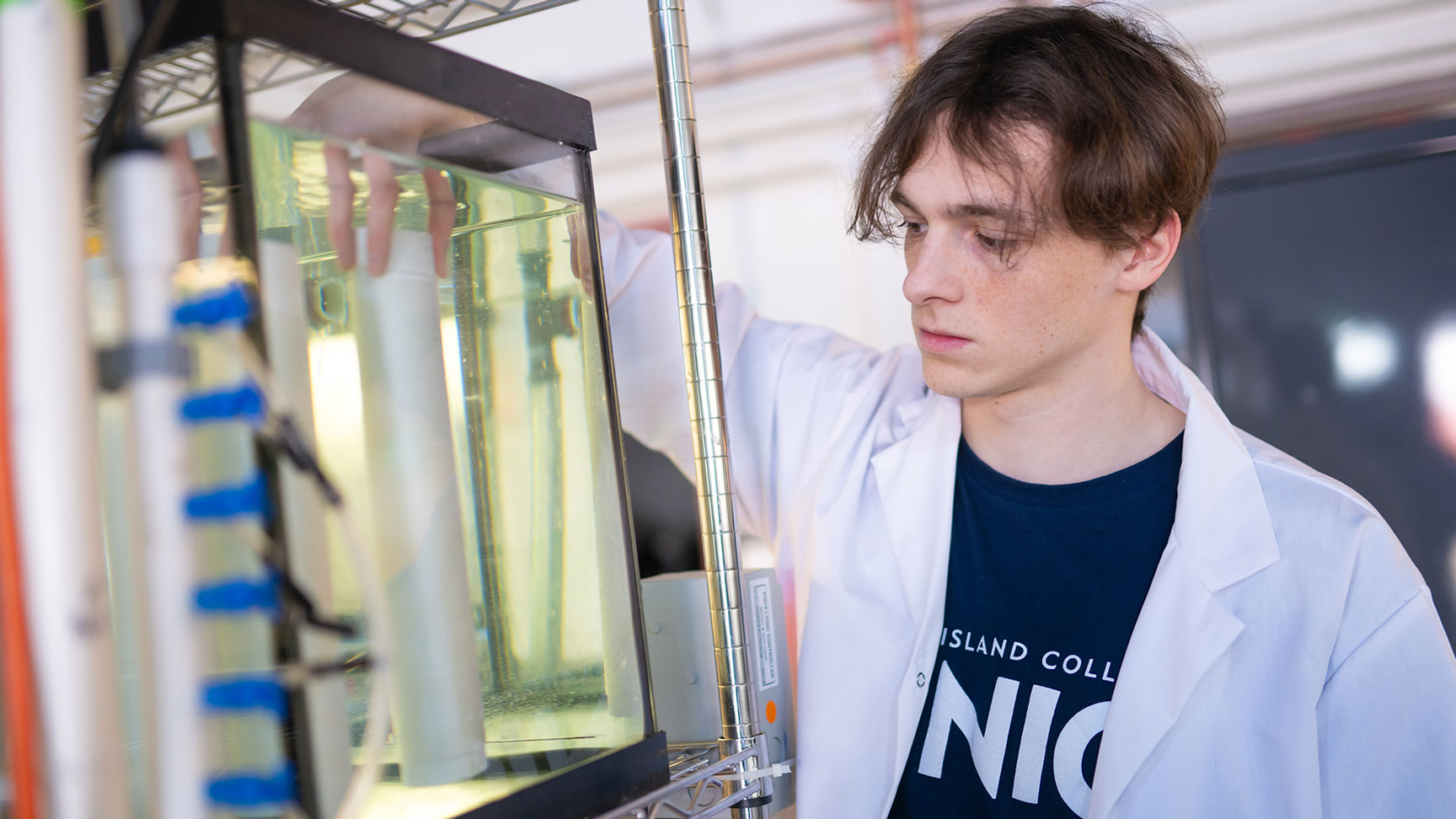
“I was reminded that if we limit our presentation of research to ‘lab coats and beakers’—which I do work with—it constrains our perspective on what is possible,” she said.
The event provides students and faculty the chance to share their work, connect with peers and celebrate the power of research, while a broader audience can learn the real-world applications and implications of what students are learning.
Lien Vannetelbosch, a chemistry student from Belgium specializing in environmental technology, is also presenting at the event. She is stressing how today’s challenges, such as developing sustainable materials, do not belong to a single discipline but exist at the intersection of many, such as chemistry, biology and ecology.
“What makes my experience here unique is the opportunity to step beyond boundaries,” Vannetelbosch said. “In the seaweed lab, I am encouraged to integrate chemical, biological and ecological thinking at the same time. This more holistic approach expands how I see research—not just as going deeper within a single field, but as connecting systems. And it is precisely at those intersections where innovation happens.”
Applied Research Day will also offer keynote addresses, oral presentations and interactive poster sessions where the work will be judged for best overall poster, community impact, innovation and creativity.
LUSH Valley will provide a light lunch starting at noon, followed by opening remarks and the keynote addresses. People will need to register in advance for lunch. Student oral presentations and posters will follow. There will also be coffee, tea and refreshments.
While there have been other research days at NIC over the years, the plan now is for it to happen on a regular basis.
“NIC Research Day, which I hope will be an annual event, is an opportunity to recognize the meaningful contributions and success of our students, and deepen our dedication to meaningful, community-connected research at NIC,” said Racey.
Applied Research Day is supported in part by funding from the Social Sciences and Humanities Research Council of Canada.