Electrician Foundation Harmonized Certificate - Technical Readiness Pathway
 |
Certificate |
 |
International applicants only - CIP 46.0301 (PGWP eligibility) |
Applications open. |
Overview
In this electrical foundation program you’ll gain essential Level 1 technical training. Learn theory and skills from workplace safety to blueprint reading and wiring methods for residential and light commercial construction.
This program offers an eight-week foundational module that covers important basics such as technical vocabulary, workplace safety standards and industry engagement.
Requirements and courses
Supplies
Students are required to provide the following list of basic supplies and tools:
Personal Protection Equipment
- Steel-toed above the ankle construction boots (see instructor)
- Non-contact voltage tester (see instructor)
- Hard hat (see instructor)
- Safety glasses
Classroom Supplies
- Sharp EL520XTBBK Scientific Calculator or Sharp EL531XTBWH Scientific Calculator
- HB pencils
- Hi-lite marker
- One set, coloured pens or pencils
- Plastic ruler - 12”
- Protractor
- Binders
- Note paper
- Textbooks and learning guides – details provided at NIC Bookstore
Note: Please purchase books on the first day of class and not in advance.
Careers
After this Foundations Certificate you'll begin your career as an entry-level electrician in the construction industry or in an industrial field.
$59,440*
Annual median estimated earnings for electricians in BC. (except industrial and power system)
Career profileCosts
Curious about funding?
Financial support is available. Learn more about financial aid and awards.
How to apply


“One memory that stands out for me is when our instructor had our class create a spiral staircase from start to finish. We worked through all the math, made the structural drawings, and then went out and built the staircase.”
Malcolm Fjeld - NIC Fabricator-Welder Foundation alum


"As soon as I started it, I fell in love with it. It’s an awesome program with amazing teachers. I learned a huge amount."
Ryan Ware - NIC Welding Foundation alum


"I really like building things, working with my hands and using the skill saws and hammering nails, so the carpentry program was a good fit. I work-part time as a labourer as well, so taking the dual credit program gives me more experience and a few more dollars an hour really quickly. It also worked out well as the carpentry program was offered in Campbell River."
Aidan Watson - NIC Dual Credit and Carpentry Foundation alum
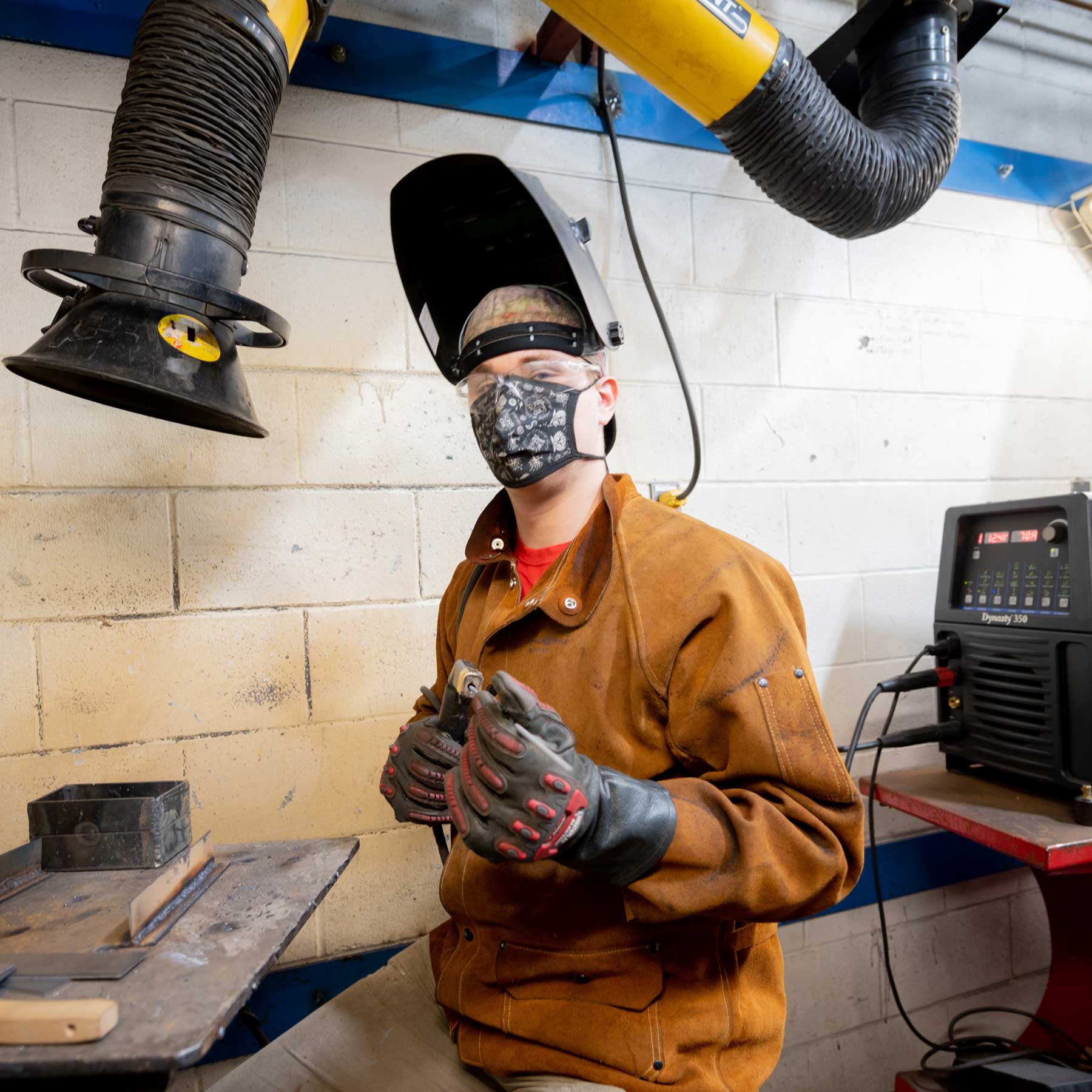

"I’ve always been a hands-on learner, so I really enjoy that the Dual Credit program in welding has allowed me to try out different techniques so I can properly understand and explore the trade. The program is a great opportunity, especially as the tuition is mostly covered."
Victor Malinski - NIC Dual Credit and Welding Foundation alum
Your path to Red Seal Certification
Frequently asked questions
Typically, NIC offers:
- Pre-apprenticeship (Foundation) programs: Level 1 Foundation training to prepare for entry-level positions.
- Apprenticeship programs: A combination of on-the-job training and classroom instruction, Level 1-4.
- Specialized certifications: Training in specific skills or safety standards, such as welding or forklift operation.
Absolutely! Colleges and industries actively encourage diversity in trades.