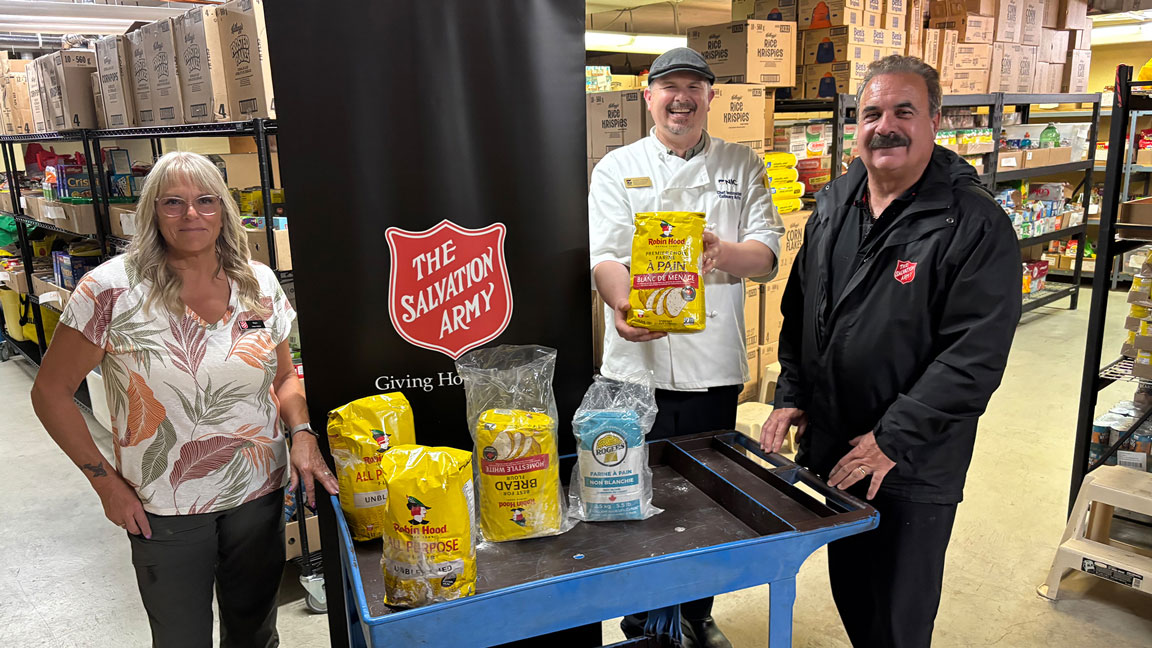
North Island College and the Salvation Army in Port Alberni are working together to help seniors and also help culinary students in the classroom.
Dave Cusson, the community engagement manager from the Salvation Army, got in touch with Sandra Rose, who oversees Pioneer Towers, a seniors’ complex. Cusson said they recognized a food security need for residents, then made a connection with Chef Jonathan Frazier of NIC’s Culinary Arts program to help. The result was the partnership, which started in January.
“The response has been fantastic. The residents are very thankful for the extra food when they attend our food truck that stops there Monday-Friday each week,” Cusson said.
Through these community connections, seniors can enjoy baked goods such as bread, buns, scones and muffins, made with flour provided by the Salvation Army branch, which manages the community’s food bank. The donated items are surplus baking from the Bistro, the on-campus establishment at NIC in Port Alberni.
“Dave raised the idea of using flour and sugar from the Salvation Army that could not easily be distributed through the food bank,” Frazier said. “From there, it became a practical partnership where students use those ingredients to make items like scones, bread, muffins and cookies through Bistro production and classroom learning.”
While the Bistro has strong support from the community, with many visitors coming to try the food the students make, there are still leftover baked goods at the end of the service day. The amount can vary depending on what the students are making and what customers are buying at the Bistro.
The program will not only help the seniors at Pioneer Towers, but it cuts down on waste. At the same time, the Salvation Army’s large donation of flour helps NIC incorporate the production of the baked goods into the culinary students’ classes without adding extra supply costs.
The partnership provides a learning opportunity for students, enforces the importance of planning, minimizes food waste and engages the students in community service while tackling food insecurity among a vulnerable population.
“By working with the Salvation Army and Pioneer Towers, we were able to create a program that supports seniors, reduces waste and gives students valuable real-world experience,” Frazier said. “It also builds a strong sense of community responsibility. Students see first-hand that their work can directly support seniors and make a positive impact in the community.”