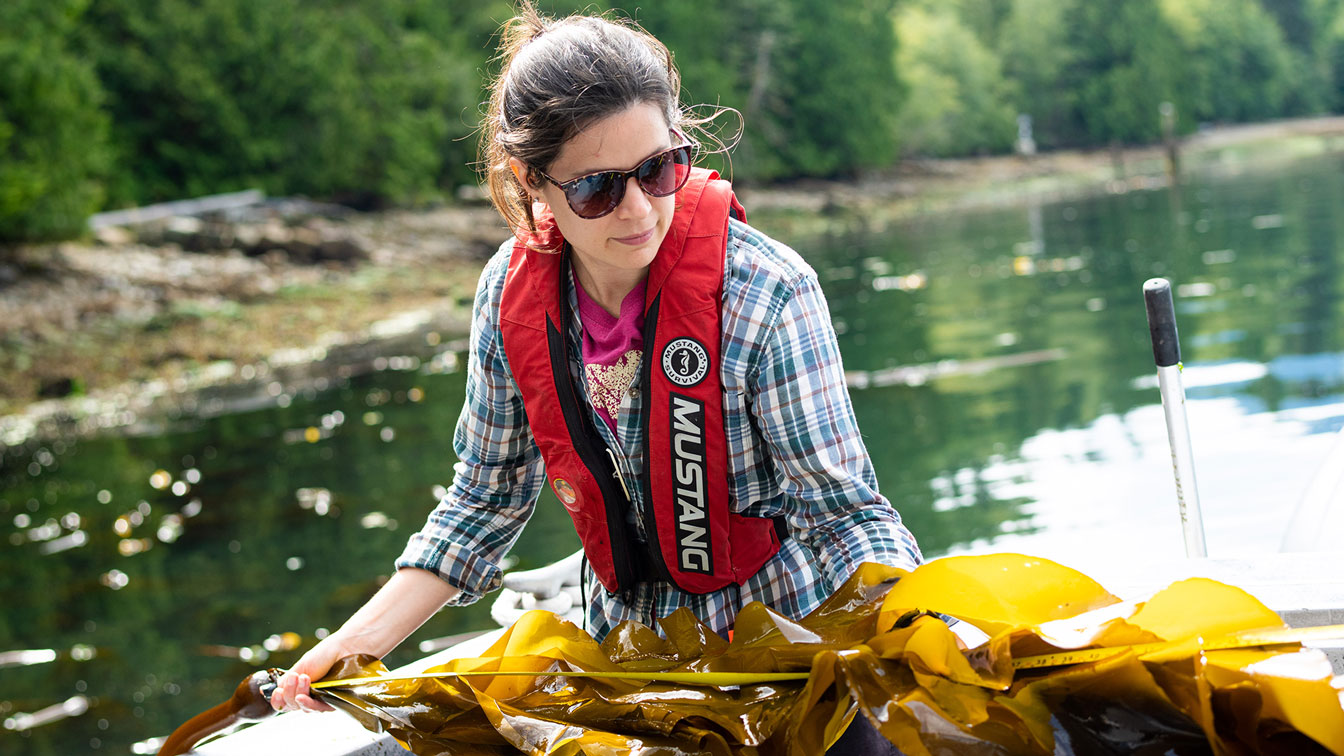
The rapidly growing seaweed sector in aquaculture is the focal point of a summit in Campbell River in May.
The Pacific Seaweed Summit, which takes place in Campbell River from May 6 to 8, will bring together researchers, industry professionals, Indigenous leaders, government representatives and community members from around the Pacific region to look at the many possibilities for seaweed aquaculture—part of the so-called “blue economy.”
“We're so pleased to be able to support the seaweed sector in British Columbia to be developed in a way that aligns with the values of coastal communities,” said Naomi Tabata, Director for North Island College’s Centre for Applied Research, Technology and Innovation.
NIC is co-hosting the event with the Wei Wai Kum First Nation, Heiltsuk Climate Action and Pacific Seaweed Industry Association, and venues will be the NIC campus and Wei Wai Kum Big House.
"The Pacific Seaweed Summit brings together industry, research, and community to accelerate innovation and build a resilient, sustainable seaweed sector on the Pacific Coast,” said Mark Smith, Pacific Seaweed Industry Association executive director.
It features keynote speakers Larry Johnson, president of the Nuu-chah-nulth Seafood Development Corporation that operates on the West of Vancouver Island, and Dune Lankard, the founder and president of Native Conservancy in Alaska, which works to preserve ancestral lands, revive ocean abundance and support thriving Indigenous communities.
There will be panel discussions on the state of the seaweed sector, environmental stewardship, processing infrastructure, investment and partnership and value-added product development.
A conference dinner happens on Thursday evening, and the final morning includes a product showcase.
NIC’s Centre for Applied Research, Technology and Innovation (CARTI) has been leading the way on seaweed research in the region through NIC’s Seaweed Innovation Hub.
The World Bank has predicted seaweed could employ up to 150 million people globally within 40 years. In preparation, Canada’s coastal regions are to play an international leadership role in the blue economy, and B.C. is home to more than 600 species of native seaweed, which offers ideal conditions for cultivation and innovation in this emerging aquaculture sector.
The province and federal government are also investing in it through projects such as NIC’s Seaweed Innovation Hub.
For more information or to sponsor or register for the Pacific Seaweed Summit, check out the CARTI webpage, which includes a downloadable event package. You can also email pacificseaweedsummit@nic.bc.ca.