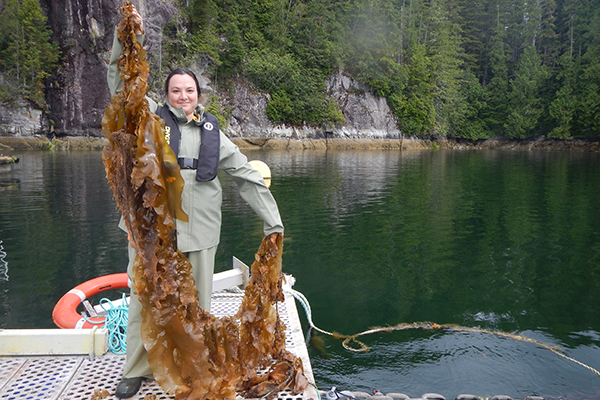
This project focused on the commercialization of kelp and other new aquaculture species. This project worked with a variety of aquaculture companies and coastal First Nations.
Project Dates: March 2013 – November 2018
Funding Amount: $1.2 million
Students Hired: 6
Project Summary
Our applied research program in Sustainable Aquaculture was initiated in 2013 and comprised of two phases. The first (2013-2018) included partners from the BC Salmon Farmers Association, focused on the development of automated water quality instrumentation for climate/ocean change monitoring and explored the potential of co-culturing kelp (as nutrient extraction species) adjacent to salmon farm operations.
The later phase furthers our research with seaweed aquaculture, assessing the technical and socio-economic aspects of co-culture with a variety of shellfish species (cockle, geoduck, scallops, sea cucumbers) and the inherent ecosystem services marine plants provide – ocean acidification, carbon and nutrient sequestration. Research includes First Nation partners from the BC Central Coast to south, west, and North Vancouver Island. We have also engaged BC Timber Sales in this initiative.
Research Team
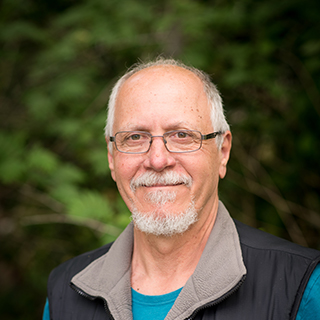
Dr. Stephen Cross
Lead Researcher

Allison Byrne
Researcher
Partners




Project Outcomes
News stories and coverage
- Interest growing in Canada’s ‘other weed’
Aquaculture North America
June 12, 2018 - Why aren’t we farming seaweed?
Campbell River Mirror
March 8, 2018 - BC kelp farming is untapped resource
BC Business
July 20, 2017 - Farming Kelp to Meet Industry Demand
Skin Inc.
February 29, 2016 - Researchers at work on new kelp source for natural cosmetics
Cosmetics Design
February 10, 2016 - Learning from and by the sea
MacLean’s
February 1, 2016 - National Observer: Could seaweed be a salve to debate over salmon farming
The UN Sustainable Development Goals (SDGs) align with the college’s commitment
to community well-being and sustainability. By integrating SDGs into applied research
at NIC, we drive innovation that supports regional development while addressing critical
social, environmental and economic priorities.
UN Sustainable Development Goals